
Arno van Kessel: “The Truth will come to light.”

Ido Dijkstra | Datum: 25 april 2026
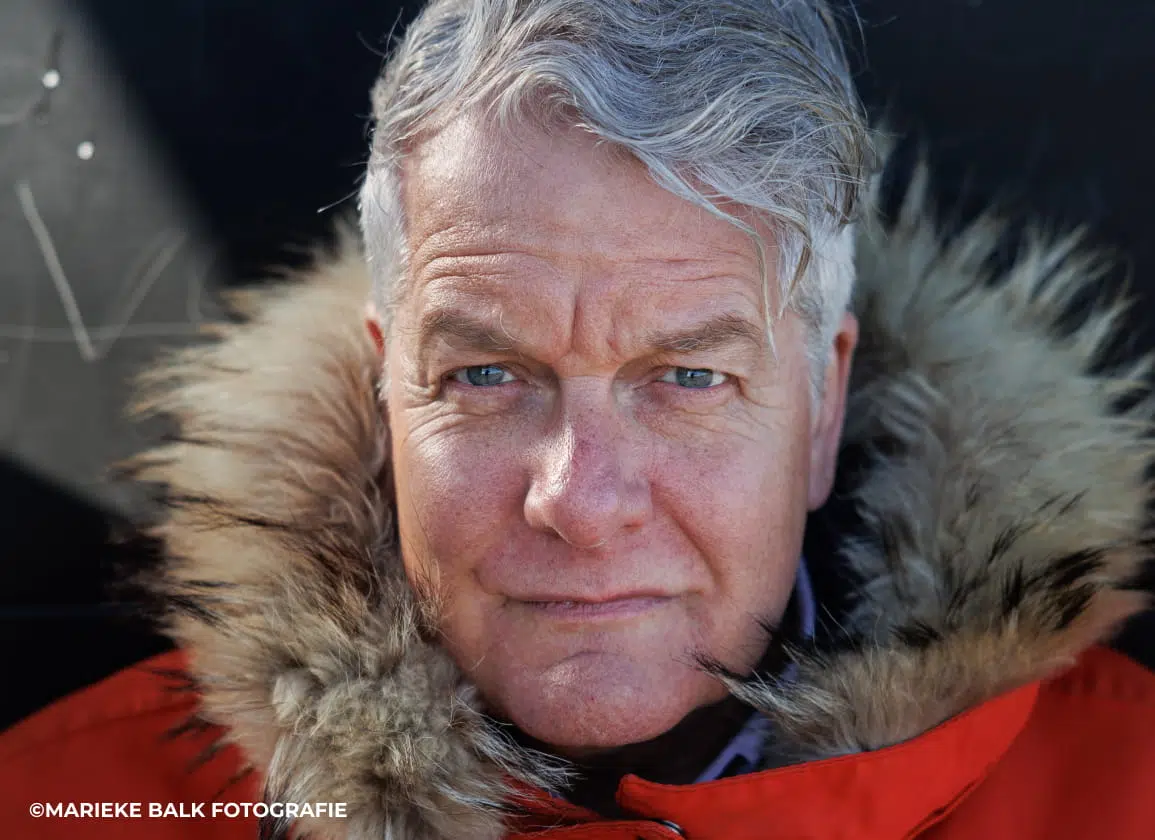
Arno van Kessel | ©Marieke Balk Fotografie
Former sollicitor Arno van Kessel – damaged, not broken, dispite his time in prison
Attentie: Het originele artikel in het nederlands vindt je hier: https://deanderekrant.nl/arno-van-kessel-beschadigd-niet-gebroken/
For more than eight months, Arno van Kessel was imprisoned in the terrorism unit in PI Vught, the most heavily secured prison in the Netherlands. “They haven’t found criminal evidence, and they won’t find anything, because I haven’t done anything criminal.” He is convinced he was arrested because he started civil proceedings against the State of the Netherlands and powerful people who, during the covid-19-period, forced a bioweapon onto the population. “A few hours after we submitted our documents to the court, a counterterrorism unit arrested me.” In an exclusive interview with De Andere Krant, the 62-year-old sollicitor looks back for the first time on his arrest and detention, which he sees as proof that there is no more rule of law.
“Clunk-clunk. Clunk-clunk.” Arno van Kessel describes the sound of a guard’s heavy boots walking across the concrete prison floor. “Krrr-clink, the rustle of keys. Kpffff, the door opens. Bang, the door of the cell compartment slams shut. Clink, the lock is on again. Clunk-clunk, the guard is coming toward my cell. You hear everything, you know, despite those thick concrete walls. Click-click, the hatch on the little window in my cell opens. In the middle of the night the LED-light goes on for five seconds. Not to see whether you’re still there, but to check whether you’re still alive. Click-clack, the hatch closes again. Clunk-clunk, the guard continues his rounds. And there I am, lying wide awake, worrying: what am I doing here?” That ‘movie’ still plays in the sollicitor’s head when he tries to fall asleep. “My sleep rhythm has been completely disrupted.”
After 260 days in pre-trial detention, Van Kessel is suffering from post-traumatic stress disorder (PTSD), stress-related rheumatism, and a temporary irritation: cramps caused by the electronic ankle monitor he has to wear. “I take three prednisones a day, because the stress is trapped in my body,” Van Kessel explains. Despite everything, he is strikingly upbeat, sharp, and cheerful. “I’m very happy to be back with my family and dog, I can sometimes enjoy things again, and I thank our dear Lord for every moment He gives me. I still have a long road ahead, I don’t go to a psychologist, and I’m far from my old self, but by nature I’m positive and still hopeful about the future. I’m damaged, but they did not manage to break me mentally,” he says. “Would you like coffee?”
Back to 11 June 2025. At around 5 a.m., Van Kessel suddenly finds himself staring down the barrel of a submachine gun held by an officer from an anti-terrorism unit. “I’d only been in bed for a few hours. In the weeks before that, I spent ten days in a row working with my colleague Peter Stassen—like a couple of monks—on our Statement of Reply, part of our civil proceedings. In that document, we argue—legally and, in my view, convincingly—that the COVID-19 injections are a bioweapon. We contend that the people we summoned knew, could have known, or should have known this, and we hold them jointly and severally liable. We want an independent judge to rule on it,” Van Kessel summarizes. “A few hours after we submitted the document, I was arrested.”
He can still play the the ‘movie’ of his arrest in his head in every detail. “They came in fairly quietly through the front door, because it wasn’t double-locked for the night. I woke up from a shout, but thought I was dreaming. A guy in a balaclava had a submachine gun aimed at my temple. The investigating judge, the dean of the Bar Association, and the public prosecutor were in my bedroom with two officers. Helena (Van Kessel’s wife, ed.) was in the attic, because I’d been working late. I was put on a chair in my underwear and given a vest. ‘Weapons,’ ‘drugs,’ ‘money,’ ‘gold,’ they were shouting. In our house—which we had already sold because we were about to emigrate to Austria—we had a walk-in closet with a safe. I pointed them to the key. They didn’t find anything criminal and they won’t find anything, because I haven’t done anything criminal. Then a bag was pulled over my head, I was put in those square handcuffs, and I was taken to the police station in Leeuwarden.”

Van Kessel immediately realises his arrest is connected to his high-profile civil proceedings against the Dutch State, Mark Rutte, Hugo de Jonge, Bill Gates, and thirteen others. “I was never naïve about that. I discussed it with my family: if I take on this case, something could happen to me. Yes, maybe they’ll take me out, I said. Peter and I also said to each other after we finished the Statement of Reply: if we put our signatures under this document, that’s the end of our careers. I did register as a solicitor in Austria, but only for the civil proceedings. After this I was going to devote my time to the recreational property that we’re going to develop there. Peter and I also agreed that if something happened to one of us, the other would continue the case individually. We felt we had to do this for the victims. No one should be able look away from what has been done to humanity: a genocide.”
At the police station in his hometown Leeuwarden, Van Kessel is told he is a suspect in the Barracuda criminal case—an alleged network of terrorists who, according to the Public Prosecutor, planned to carry out an attack on the NATO summit (24 and 25 June 2025) in The Hague. “A ridiculous story, precisely because Peter and I, as lawyers, act through the legal system. That is the arena of the rule of law, where all parties are equal and an independent panel of judges decides—if necessary, even about the State of the Netherlands. At least, in theory. On top of that, I am a convinced follower of Jesus (see box). Our dear Lord did not say for nothing: ‘All who draw the sword will die by the sword’ (Matthew 26:52). If I had really planned to do what they accuse me of, I agree they should have locked me up and thrown away the key. It still makes me angry that they dared to accuse me of terrorism.”
Van Kessel knows he himself gave the prosecution the proverbial ammunition. “They must have seen it as a gift that I got into that car on 6 May,” Van Kessel says. He is referring to the conversation tapped by detectives in the car of Ritske B., where the owner of the vehicle and Harm S. were also present. On the way back, some heavy language was used, Van Kessel acknowledges. “It was after an evening with lots of sausage, cheese, and beer—and lots of those rough types. Good people who speak their minds and are fed up with the wreckage politics leaves behind. Many of them are donors to Recht Oprecht (the foundation behind the civil proceedings, ed.). A few days earlier I was asked whether I wanted to give an update about the case. Before I spoke, the truckers wanted my advice about demonstrating at the NATO summit. I gave them a very clear negative recommendation: an emergency ordinance applies, you won’t achieve anything, no flag will be shown on TV, you’ll be arrested, and your trucks and tractors will be confiscated, I said. In short, I told them they had no business being there. My advice went down badly. ‘So what do you want to do then—do nothing?’ I was told. It was held against me all evening.”
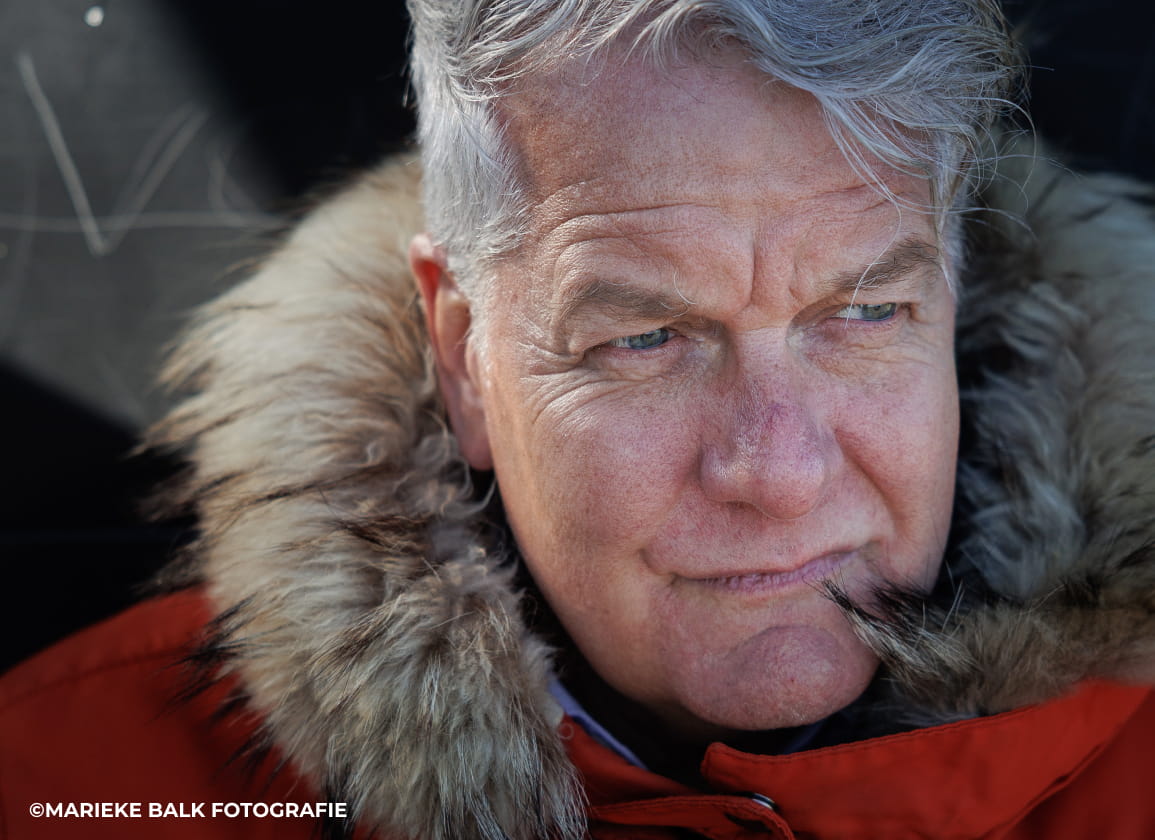
Arno van Kessel | ©Marieke Balk Fotografie

On the way back from that “frustrating evening,” the three men in the car hypothetically discuss how a government might be disrupted. Van Kessel, who had watched a film about the IRA the day before, mentions the example of a car bomb in front of a government building. A shot through the mayor’s window is also discussed. Nowhere in the entire conversation does it appear that they seriously intend to do any of this. Van Kessel says several times that he has no idea how to go about it. In the more than a month afterward—until the arrest on 11 June—no one took any action toward the scenarios discussed. Yet the prosecution made him the linchpin of a terrorist network. “In that car I said stupid, immoral things. Unworthy of a lawyer. In my cell I asked God for forgiveness for that,” Van Kessel says. “But the statements are only shocking if stripped of their context. The prosecution did that very deliberately, to eliminate me as a solicitor in the civil proceedings.”
From mid-June 2025 to 26 February 2026, Van Kessel—a man with no criminal record—was in prison. The first six days were in Leeuwarden at the police station, after that in the terrorism unit of the high-security Penitentiary Institution in Vught. Van Kessel considered the first period the hardest. “Prison is meant to make you reflect on your wrongdoing. If you haven’t done anything, then every day you wake up with the thought: what am I doing here? That is psychologically heavy. In the beginning I was also put under full restriction. That means 23 hours a day in isolation, without contact with the outside world. Helena didn’t even know where I was being held.”
He describes the prison as a concrete colossus. “From the little window in my cell I looked out onto a concrete wall. At first I was allowed one hour a day to go outside into the yard, but this was only a space between four concrete walls. If you look up, you see the sky through a grid. That’s it.”
At first, Van Kessel still thinks his stay in the cell will be relatively short, at most 90 days. “I’m not a criminal lawyer, but I did learn in law school that a suspect may be held in pre-trial detention for a limited time. I didn’t know all of this had changed after 9/11. My solicitor, Chris-Jan Kamminga, explained to me the law had changed. It is now possible to hold terrorism suspects for up to two years in prison without a substantive hearing of the case. When he told me that, I felt a chill down my spine.”

In December, he faced a very tense situation in the prison in Vught. Van Kessel and Ritske B.—a co-suspect in the Barracuda case “whom, contrary to what the prosecution claims, I only really got to know properly in Vught”—were, as part of some experiment, placed with a group of four jihadists from Arnhem who had been convicted of preparing an attack on the Gay Pride. “Ritske and I wanted a little Christmas tree on the shared unit, but the four demanded it be removed. When around Christmas we watched The Passion of the Christ (a film about the suffering of Jesus Christ, ed.), they went berserk. They spat on Jesus and we were faced with death threats,” Van Kessel says, illustratively sliding his thumb across his throat. “After that, the potato peelers were removed from the shared kitchen to for safety reasons. The guards were also openly threatened. The jihadists said: we have nothing left to lose anyway—if we die, we go to paradise. While we weren’t allowed a Christmas tree, they shouted to Allah five times a day. In the corridor next to my cell hung a poster of the Kaaba, the holy black box forMuslims in Mecca. I was shocked by what it’s like in prison.Although he compares the prison in Vught to Kamp Vught—the Nazi penal camp in the Second World War—Van Kessel is full of praise for the guarding staff. “They made my suffering more bearable. During the first three months of my stay, management withheld my medication. I got worse and worse, to the point where I could no longer even get up. I lay in bed alone for days. The guards arranged a better mattress, instead of the thin piece of foam rubber on the iron plate you normally lie on. My mentor—the guard who personally guided me—demanded from the unit doctor that I receive my medication.”
Van Kessel says that from the beginning he was courteous toward the guards, all of whom he knows by name. He told them about the civil proceedings and his faith in Jesus. In addition, he was soon flooded with mail. “The thousands of letters and cards kept coming, from all over the world. They all had to go through the censorship department. It caused quite a stir, just like the demonstrations outside the gate. Although I didn’t experience any of it myself, I know from the guards that it was the talk of the town.”
According to Van Kessel, the design flaws lie in the system and at the top, where corrupt people too often pull the levers—because how else is it possible that a suspect who has not been convicted ends up among convicted jihadists? “Two and a half hours away from my family. Without any kind of credible evidence, while the prosecution can drag out the process until it has finished investigating, and the media largely stays silent about it. That shouldn’t be possible in a state governed by the rule of law. As a lawyer I always believed in that, but that belief has taken a bit of a dent now,” he says euphemistically.
The former lawyer says that “when the time is ripe” he will also address the accusations against him and his removal from the bar roll in substance. For now, he is using his energy to prepare his defense with his lawyers. Despite everything that has happened to him, he has no regrets. “What I’ve experienced is only a fraction of the suffering our dear Lord carried for all of us. Besides, I always have Monique in front of me. She was the first vaccine-injury victim who came to me. An operating-room nurse—someone who truly did it for others. She was among the first to get a COVID shot—from a batch that caused many deaths. Yes, we submitted all of that in black and white to the court. I saw her deteriorate in a short time from a still somewhat healthy woman into a mummy. She ended her suffering by undergoing euthanasia. Her story is burned into my mind.”
“Of course I have very often asked God why this is happening to me,” says Arno van Kessel, who came to faith during the COVID period and was baptized. “For me, this time has made clear what is really going on: we are living in the end times. I have also received answers. The suffering I experienced is only a fraction of what Jesus had to endure for all of us. It has been purifying.” Van Kessel says his faith in Jesus—whom he usually calls our dear Lord—has only grown stronger. “Peter (Stassen, ed.) has rediscovered his faith. That’s why we very deliberately brought the Biblical message forward in the court documents. The last times, Peter—with whom, for the sake of the civil proceedings, I have no contact—also said: are you on the side of Satan or on the side of Jesus? That was a deliberate choice: appealing to the conscience. Most people don’t realize their conscience has become veiled. We appeal to it, because there is still a road back through Jesus. That even applies to Mark Rutte. I don’t think he will choose that, but I would welcome it. The Truth will come to light.”
HELP MEE ONS DOEL TE BEREIKEN – 1000 EXTRA ABONNEES
We delen als krant al vijf jaar artikelen gratis en zullen dat blijven doen. Omdat we deze week 1000 nieuwe abonnees willen werven, zijn de artikelen deze week alleen geheel te lezen voor onze abonnees. Word ook abonnee en krijg toegang tot ons complete archief. Mis geen enkel artikel van De Andere Krant en bouw mee aan ons vrije nieuwsplatform.
Meer in De Andere Krant: Lees in de krant meer opmerkelijke nieuwsberichten, achtergronden, columns en bijzondere initiatieven en tips in onze SamenLeven rubrieken.
Lees meer en weet meer met een abonnement op De Andere Krant. Nog geen abonnee? Overweeg dan een van onze abonnementen of probeer 6 weken voor € 20 met het proefabonnement en steun de onafhankelijke journalistiek!
Wat je alleen leest in De Andere Krant





Dossiers